
This is a trend, is it of benefit?
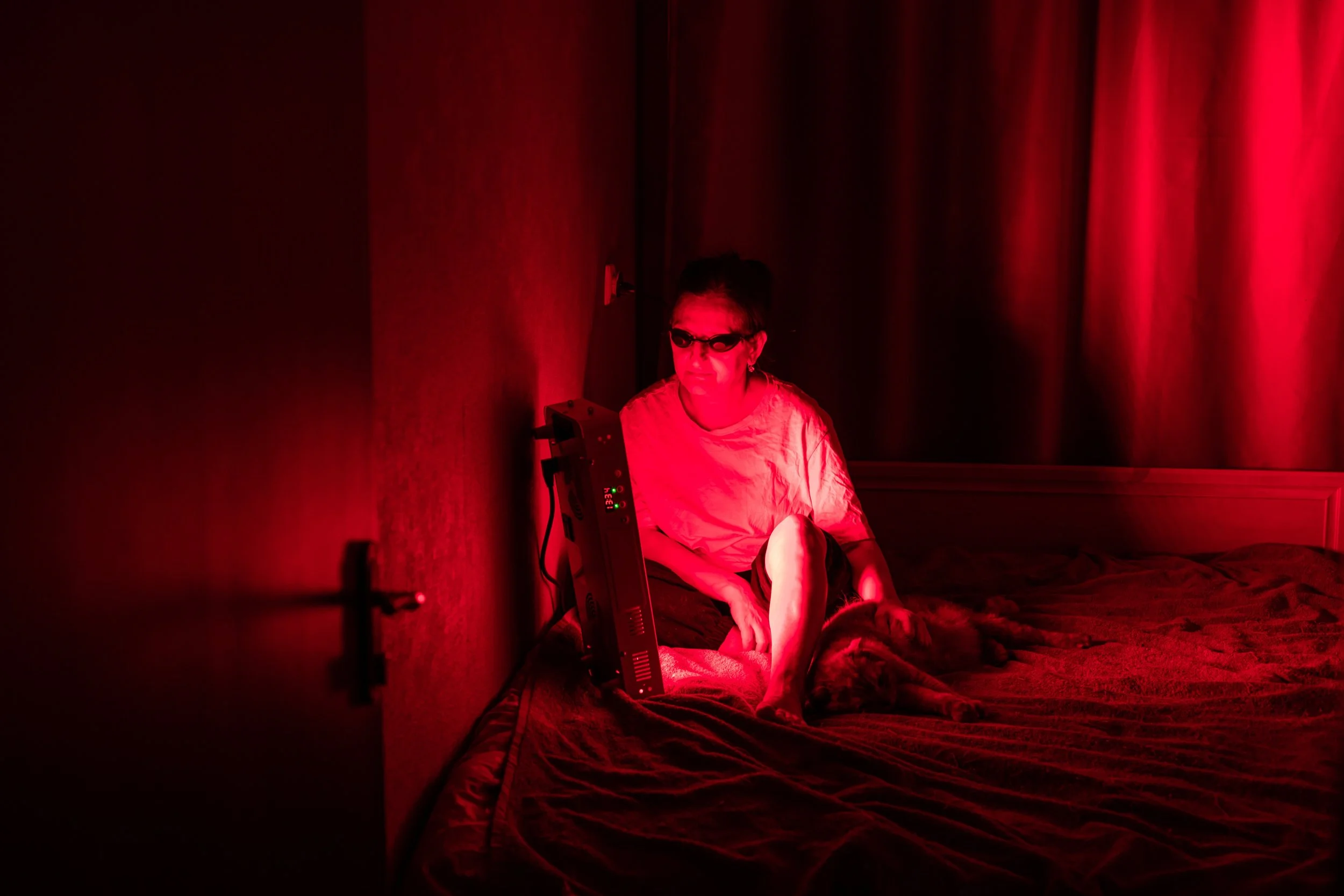
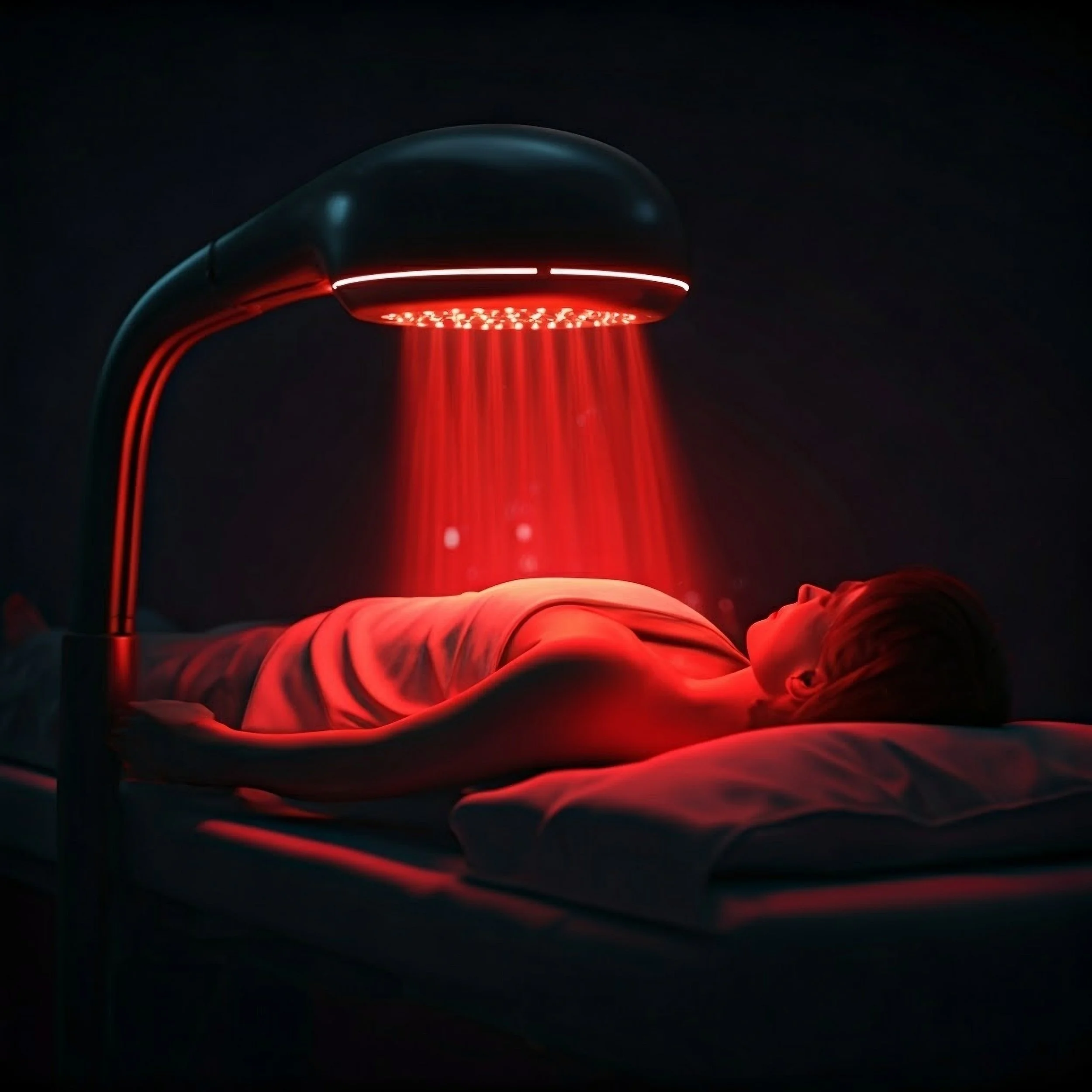
Targeted photobiomodulation (PBM) therapy is gaining in popularity for application with in-home use for cosmetic, dermatological, metabolic, and pain-relief benefits. Face masks, free-standing light panels, wraps, and wands, including “pelvic wands,” are now available for home use.
Pelvic health (down there) applications have two different formats:
Externally, for the vulva, vestibule/introital region, or male perineum and prostate/testicle region. Light panels, wraps, and even “face masks” are placed shining on the groin/pelvic area by consumers looking for a pelvic health boost.
Internally, via wand-like devices for vaginal health, they are available. This is a self -care alternative to low-level laser treatments via a gynecologist. The wands have varied light-emitting patterns, from blue light (antibacterial/antiviral) to a varied level of PBM in the red-light spectrum. Vibration may be included for relaxation, stretch, and or intimate pleasure.
Usage is typically advised 10 min on a low level to start, two to three times a week. Medical research is ramping up on the benefits of PBM in the pelvic region, but most studies end with “more research is needed.
I put on my detective hat for you and have research links here (for care providers or consumers wanting more info) to check out at the blog-ending. There are primarily small studies showing statistically significant benefits of PBM, including, believe it or not, older mouse erectile dysfunction (ED) treatment, and enhanced (petri dish) mouse and human sperm motility.
Can I afford it? How much do devices cost?
Prices vary wildly, from $49.00 for a wrap-around model up to $500.00 or more, depending on the size and manufacturer. Consumers’ research online is warranted, and ask a trusted healthcare provider for advice.
What type should I try for myself, external or internal (female use)?
External devices are less expensive and can be used in multiple areas, such as for mild low back pain and desired muscle relaxation, or for mild pelvic discomfort, such as an overactive/tight pelvic floor in females and males. It is advised to start with a general use via the external option. I have an external wrap that has helped my Achilles, hamstrings, and shoulders.
If you are comfortable with your pelvic floor and feel you need a boost for intimate health, or post-partum, peri-or menopause, an internal wand may be of great benefit. Devices are available under the names Mivourr, Fringe Light Therapy Wand, and JoyLux vFit. These wands can provide the benefits touted in research, including increased blood flow, relaxation, increased cellular energy/ATP production, and more.

Will this enhance my sexual health?
It depends on what area or topic of your intimate function is of concern to you. Sexual health is studied in several domains, such as desire, libido, satisfaction, performance, orgasm, and partner communication dynamics.
All the lifestyle medicine elements of being/feeling healthy contribute to sexual health, including stress management, good sleep, social support, nutrition, exercise, and low to no use of risky substances (alcohol, tobacco, drugs). If you are sleep deprived, stressed out, undernourished, and drink too much wine and expect great intimate function, good luck. But yes, a belt/wrap or wand can increase blood flow and relaxation-rest and can be a tool to reduce discomfort with sex, and enhance pleasure. (Fredrice CP et al 2022). Estrogen and other hormone therapies may be indicated for medical care.
Can PBM help me strengthen my pelvic floor muscles to help with bladder problems?
Yes, and no, depending on your bladder problem. Not everyone needs kegels, pelvic floor muscle tightening; some need relaxation. Don’t blindly start strengthening. If you know you have a weakness from an OT/PT/NP or other exam, you can practice gentle contractions while reclining. However, the internal wands are not intended as strengthening devices. You can consider “somatics”, connecting with your breath and pelvic floor muscles while reclining and using either an external or internal device. Or, you can practice deep pelvic relaxation during the use of your chosen device. Stretches of the lumbar, pelvic, hip, and other areas are part of a complete pelvic relaxation program. Bladder training for OAB, urgency, frequency, leaks, or no leaks varies for each individual’s problems (see links below for your empowerment).
Any PBM use can include restorative rest time, with diaphragm breathing and meditation/mindfulness while in use.
PBM is not meant as a stand-alone therapy, and if there is itching or significant pain, see your care provider to rule out infection and or other conditions. Safety considerations include: no use with sensory loss, active local infections, or with photosensitizing meds such as tetracyclines, antifungals, isotretinoin, or chemotherapy. PMB uses light waves at the lower end of the spectrum (600–1000+nm wavelengths) and can be considered a low-level, non-ablation (no burning or cutting) type of laser. Use of a device is generally advised for 10 minutes, 3 times a week.
Medical benefits of PBM in humans range from improved skin texture, elasticity, and appearance, reduced wrinkles, increased circulatory flow, enhanced comfort/satisfaction, and reduced pain with sexual intercourse in women, reduced oxidative stress, and enhanced cellular energy production. Small studies show a reduction in overactive bladder symptoms and reduced stress incontinence.
Resources for Pelvic Self-Care: Can be used along with a PBM program:
Freebie (Updated March 2026): 7 Reasons Bladders Leak and your Personal Solutions
Happy Bladder Masterclass (for being your own bladder detective)
Have a question on this topic? Send me a question via mmasoncover@gmail.com with the subject “PBM question”.
As always, I have telehealth and in-person care, as well as info-packed, enjoyable seminars for health care providers.
Resources:
Frederice CP, de Mira TAA, Machado HC, et al Effect of Vaginal Stretching and Photobiomodulation Therapy on Sexual Function in Women With Pelvic Floor Myofascial Pain - A Randomized Clinical Trial. J Sex Med. 2022 Jan;19(1):98-105. doi: 10.1016/j.jsxm.2021.10.008. PMID: 34955173. https://pubmed.ncbi.nlm.nih.gov/34955173/
Kohli N, Jarnagin B, Stoehr AR, Lamvu G. An observational cohort study of pelvic floor photobiomodulation for treatment of chronic pelvic pain. J Comp Eff Res. 2021 Dec;10(17):1291-1299. doi: 10.2217/cer-2021-0187. Epub 2021 Sep 7. PMID: 34490787. https://pubmed.ncbi.nlm.nih.gov/34490787/ Many benefits: article summary: “Compared with baseline, 64.5% of women showed improvement in overall pain, pain with bowel movement, intercourse, exercise, urination, sitting, and vulvar pain”
Małgorzata Starzec-Proserpio, Marcela Grigol Bardin, Melanie Morin, Not all lasers are the same: a scoping review evaluating laser therapy for vulvodynia, Sexual Medicine Reviews, Volume 12, Issue 1, January 2024, Pages 14–25, https://doi.org/10.1093/sxmrev/qead039https://academic.oup.com/smr/article-abstract/12/1/14/7287819
Tasker F, Kirby L, Grindlay DJC, et al, Laser therapy for genital lichen sclerosus: A systematic review of the current evidence base. Skin Health Dis. 2021 Jun 15;1(3):e52. doi: 10.1002/ski2.52. PMID: 35663131; PMCID: PMC9060003. https://onlinelibrary.wiley.com/doi/pdfdirect/10.1002/ski2.52
Zheng ZJ, Chen Y, Chen QX, et al Near-infrared photobiomodulation therapy for age- related erectile dysfunction: molecular and physiological restoration in a mouse model. Asian J Androl. 2026 Jan 1;28(1):80-88. doi: 10.4103/aja202532. Epub 2025 Jul 29. PMID: 40727954; PMCID: PMC12912745. https://pubmed.ncbi.nlm.nih.gov/40727954/
Mouse study: ED (Zheng Z et al) “Collectively, these findings highlight NIR-PBMT as a promising non-invasive therapy for ARED, acting through multiple pathways to reverse pathological remodeling and restore endothelial function.”
P.S. Find quick tips and insights for support on my @centralstationpt Instagram